A mobile-first wholesale ordering system
A mobile-first wholesale platform designed to support high-volume, repeat ordering for small retailers.

Client
- Oscar Soles
Role
- User Research
- Interaction Design
- Mobile UX
- Usability Testing
Project team
- Product Manager
- Engineers
tl;dr
- Moved wholesale ordering off Google Sheets into a centralized platform
- Optimized ordering for speed, bulk purchasing, and repeat use on mobile
- Reduced navigation and unnecessary detail by keeping actions on a single page
- Supported a long-term platform vision beyond a simple storefront
Problem
Oscar Soles’ wholesale ordering process relied on shared Google Sheets, making it difficult to support their customers
Because orders were placed manually through spreadsheets, it became difficult to scale, maintain accuracy, and support repeat purchasing for growing SMB retailers.
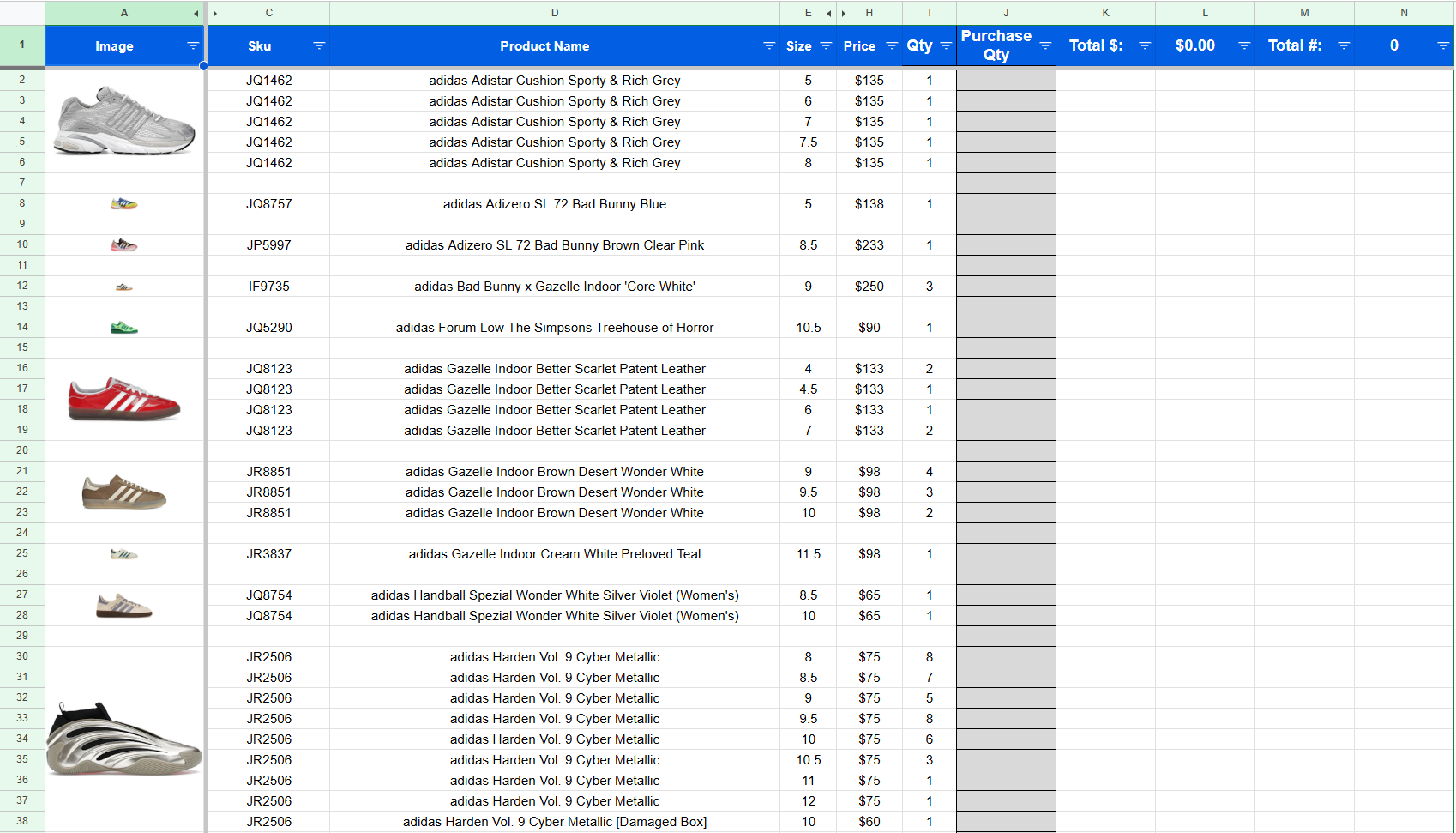
** Spreadsheet-based ordering made repeat purchasing and scale difficult for both retailers and internal teams.
Retailers had no clear way to browse inventory, place large orders efficiently, or reorder products they bought regularly, while internal teams struggled to manage volume as the business grew.
context & constraints
The platform needed to support fast, repeat ordering for small retailers working primarily on mobile.
Oscar Soles’ customers were small retail businesses placing frequent orders on the go, often managing inventory across multiple store locations. The experience needed to prioritize speed and efficiency over browsing or discovery, with core workflows fully usable on mobile rather than limited to desktop-only tools.
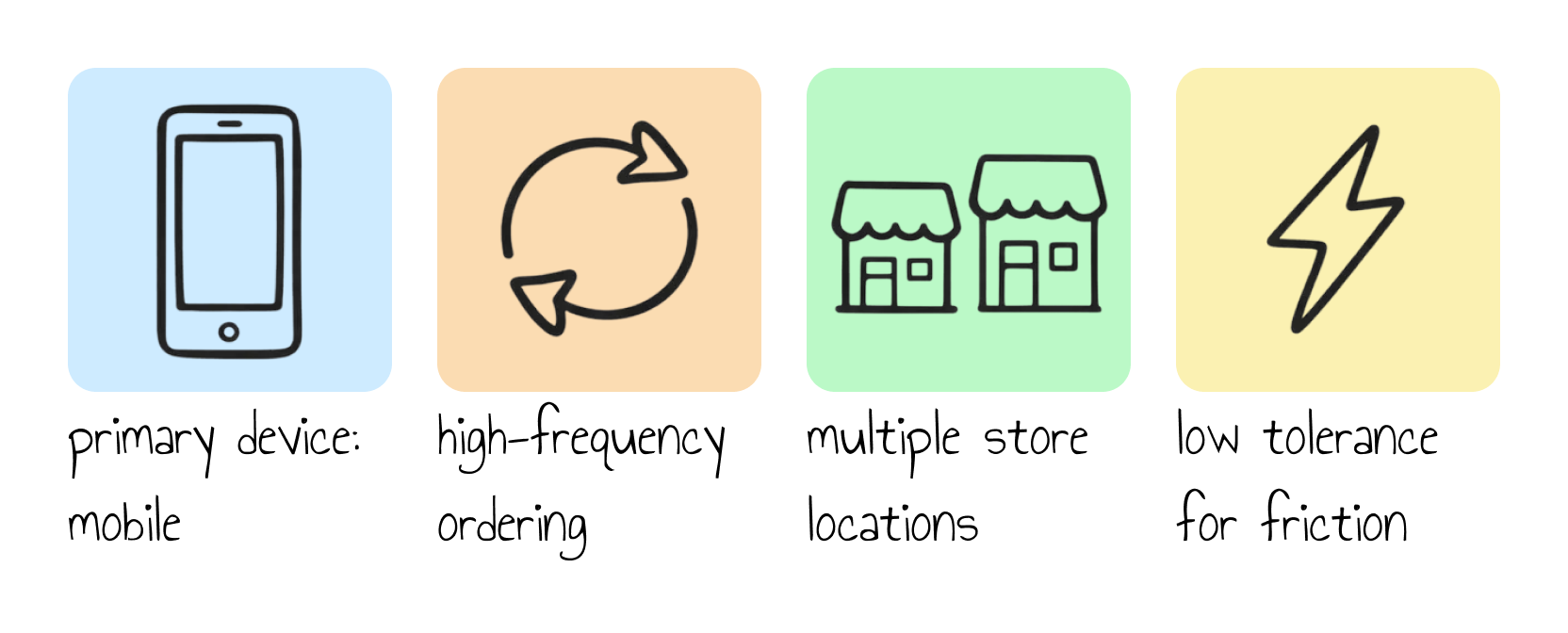
** Key constraints shaping the experience: frequent reordering, mobile-first usage, multi-location inventory, and low tolerance for friction.
product vision
The long-term goal was not just a storefront, but a platform retailers could eventually run themselves.
Beyond supporting wholesale ordering for Oscar Soles, the platform was designed to scale into a system where retailers could be onboarded as administrators, using the same tools to manage inventory and sell to smaller buyers - extending the platform beyond a single business.
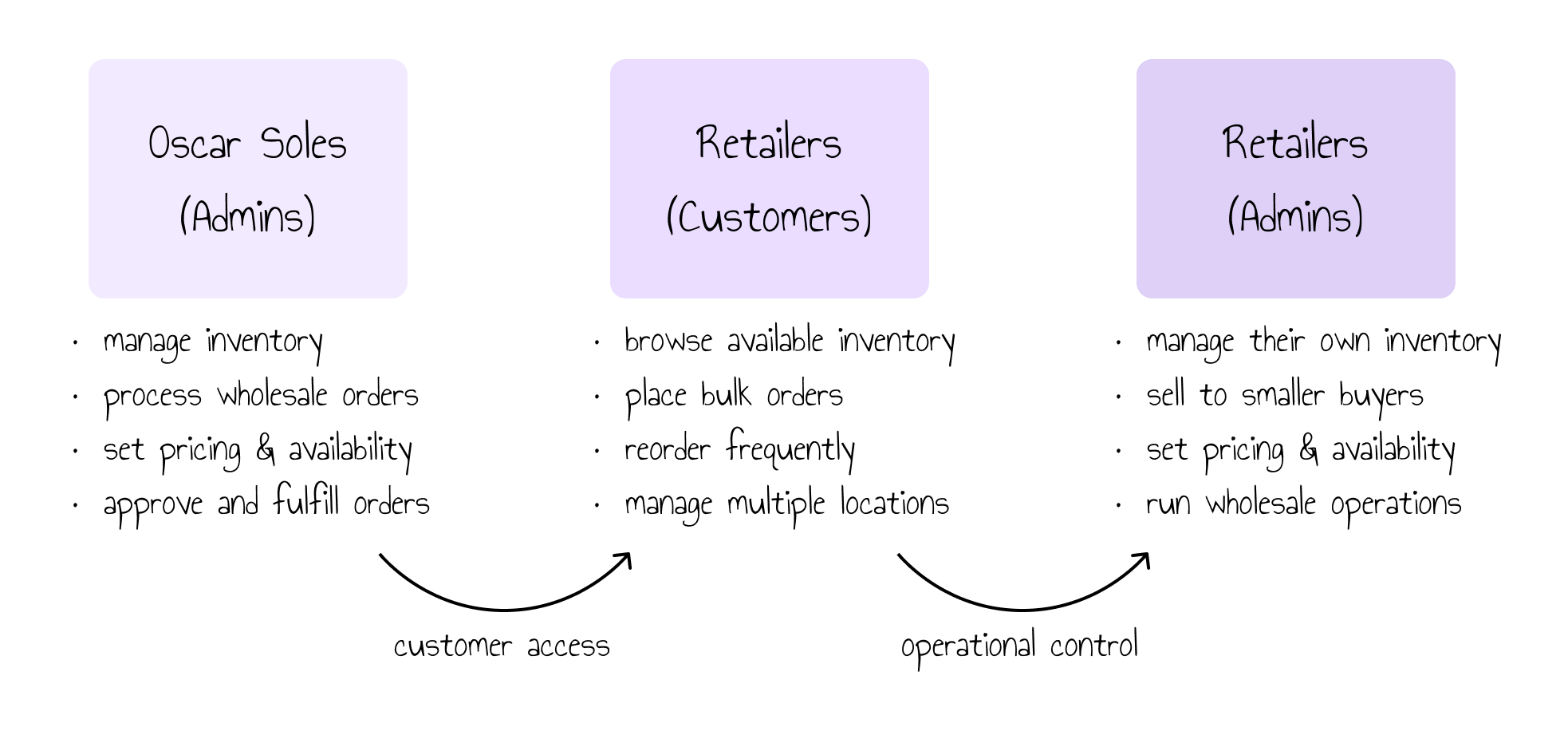
** The same platform was designed to support different roles over time, expanding access and permissions without changing the core system.
design principles
Reducing navigation and unnecessary detail was critical for speed and repeat use.
Instead of relying on traditional product detail pages, interactions were kept contextual through inline actions, dropdowns, and bulk controls. This allowed customers to understand availability and take action quickly without breaking their flow.
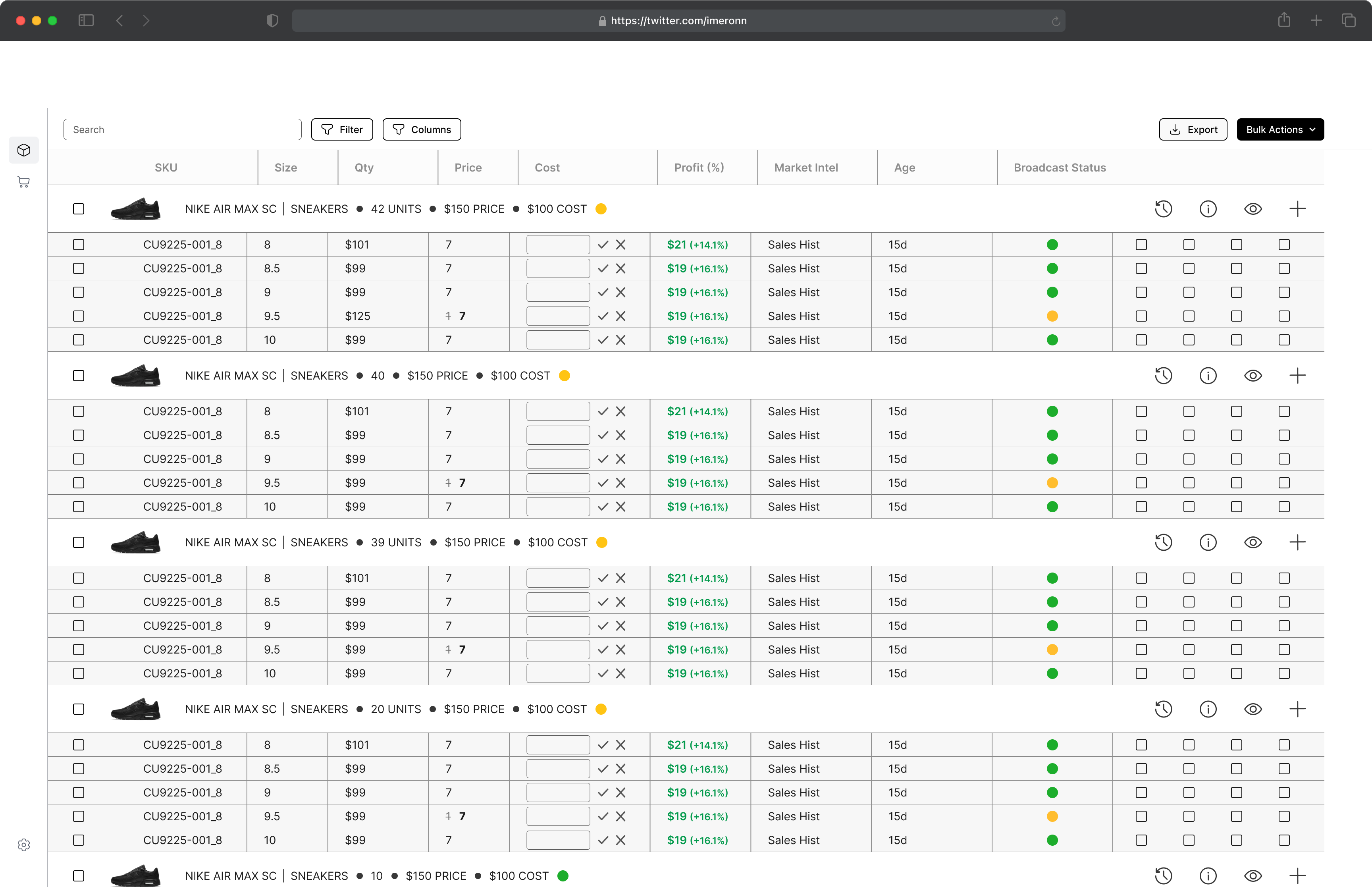
Admin View - ATS
** Rather than navigating between multiple views, teams could review, edit, and take action on inventory directly within a single, information-dense table.
core experience
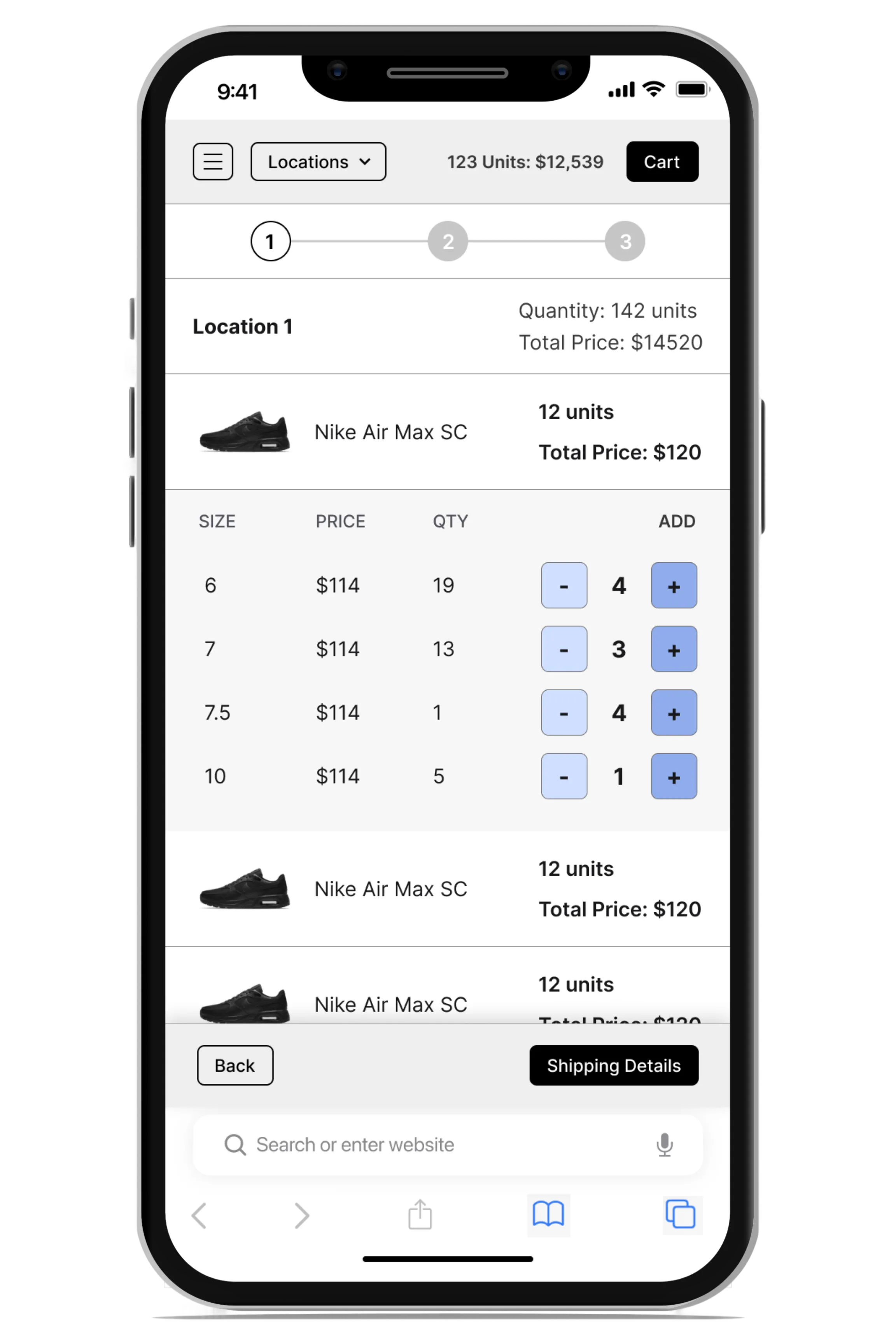
Ordering was designed as a single, continuous flow rather than a series of pages.
Rather than moving users through separate pages, ordering unfolded through expandable states within the same interface. Retailers could move from deal discovery to size selection, cart review, and checkout using inline expansions and dropdowns, keeping context intact at every step.
This allowed users to:
- Start from curated deal entry points
- Drill into products without leaving the list
- Adjust sizes, quantities, and locations inline
- Review and finalize orders without resetting their progress
Deal selection
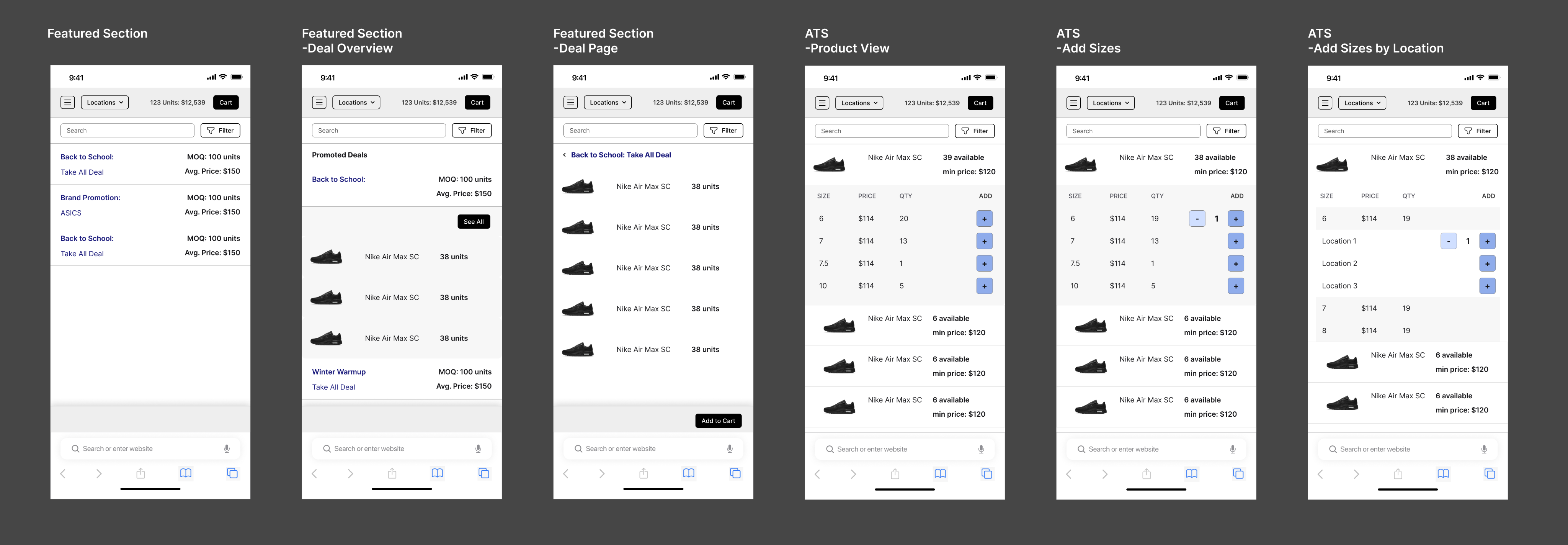
order checkout

** Shipping details and confirmations are handled through dropdowns, keeping users in the same flow from start to finish.
in practice
Small retailers were able to place large, repeat orders quickly without disrupting their daily work.
Retailers often returned to the platform multiple times a day to restock inventory or place follow-up orders. The mobile-first experience allowed them to order between tasks or across locations, replacing spreadsheets with a system that fit naturally into their existing routines.

Related Notes
Article
Balancing speed and complexity in wholesale ordering
Notes on building a mobile-first wholesale ordering system while balancing speed, clarity, onboarding, and inventory complexity.
View More
A mobile-first wholesale ordering system
A mobile-first wholesale platform designed to support high-volume, repeat ordering for small retailers.
Client
- Oscar Soles
Role
- User Research
- Interaction Design
- Mobile UX
- Usability Testing
Project team
- Product Manager
- Engineers
tl;dr
- Moved wholesale ordering off Google Sheets into a centralized platform
- Optimized ordering for speed, bulk purchasing, and repeat use on mobile
- Reduced navigation and unnecessary detail by keeping actions on a single page
- Supported a long-term platform vision beyond a simple storefront
Problem
Oscar Soles’ wholesale ordering process relied on shared Google Sheets, making it difficult to support their customers
Because orders were placed manually through spreadsheets, it became difficult to scale, maintain accuracy, and support repeat purchasing for growing SMB retailers.
** Spreadsheet-based ordering made repeat purchasing and scale difficult for both retailers and internal teams.
Retailers had no clear way to browse inventory, place large orders efficiently, or reorder products they bought regularly, while internal teams struggled to manage volume as the business grew.
context & constraints
The platform needed to support fast, repeat ordering for small retailers working primarily on mobile.
Oscar Soles’ customers were small retail businesses placing frequent orders on the go, often managing inventory across multiple store locations. The experience needed to prioritize speed and efficiency over browsing or discovery, with core workflows fully usable on mobile rather than limited to desktop-only tools.
** Key constraints shaping the experience: frequent reordering, mobile-first usage, multi-location inventory, and low tolerance for friction.
product vision
The long-term goal was not just a storefront, but a platform retailers could eventually run themselves.
Beyond supporting wholesale ordering for Oscar Soles, the platform was designed to scale into a system where retailers could be onboarded as administrators, using the same tools to manage inventory and sell to smaller buyers - extending the platform beyond a single business.
** The same platform was designed to support different roles over time, expanding access and permissions without changing the core system.
design principles
Reducing navigation and unnecessary detail was critical for speed and repeat use.
Instead of relying on traditional product detail pages, interactions were kept contextual through inline actions, dropdowns, and bulk controls. This allowed customers to understand availability and take action quickly without breaking their flow.
Admin View - ATS
** Rather than navigating between multiple views, teams could review, edit, and take action on inventory directly within a single, information-dense table.
core experience
Ordering was designed as a single, continuous flow rather than a series of pages.
Rather than moving users through separate pages, ordering unfolded through expandable states within the same interface. Retailers could move from deal discovery to size selection, cart review, and checkout using inline expansions and dropdowns, keeping context intact at every step.
This allowed users to:
- Start from curated deal entry points
- Drill into products without leaving the list
- Adjust sizes, quantities, and locations inline
- Review and finalize orders without resetting their progress
Deal selection
order checkout
** Shipping details and confirmations are handled through dropdowns, keeping users in the same flow from start to finish.
in practice
Small retailers were able to place large, repeat orders quickly without disrupting their daily work.
Retailers often returned to the platform multiple times a day to restock inventory or place follow-up orders. The mobile-first experience allowed them to order between tasks or across locations, replacing spreadsheets with a system that fit naturally into their existing routines.

Related Notes
Article
Balancing speed and complexity in wholesale ordering
Notes on building a mobile-first wholesale ordering system while balancing speed, clarity, onboarding, and inventory complexity.
View More
Home
A mobile-first wholesale ordering system
A mobile-first wholesale platform designed to support high-volume, repeat ordering for small retailers.
Client
- Oscar Soles
Role
- User Research
- Interaction Design
- Mobile UX
- Usability Testing
Project team
- Product Manager
- Engineers
tl;dr
- Moved wholesale ordering off Google Sheets into a centralized platform
- Optimized ordering for speed, bulk purchasing, and repeat use on mobile
- Reduced navigation and unnecessary detail by keeping actions on a single page
- Supported a long-term platform vision beyond a simple storefront
Problem
Oscar Soles’ wholesale ordering process relied on shared Google Sheets, making it difficult to support their customers
Because orders were placed manually through spreadsheets, it became difficult to scale, maintain accuracy, and support repeat purchasing for growing SMB retailers.
** Spreadsheet-based ordering made repeat purchasing and scale difficult for both retailers and internal teams.
Retailers had no clear way to browse inventory, place large orders efficiently, or reorder products they bought regularly, while internal teams struggled to manage volume as the business grew.
context & constraints
The platform needed to support fast, repeat ordering for small retailers working primarily on mobile.
Oscar Soles’ customers were small retail businesses placing frequent orders on the go, often managing inventory across multiple store locations. The experience needed to prioritize speed and efficiency over browsing or discovery, with core workflows fully usable on mobile rather than limited to desktop-only tools.
** Key constraints shaping the experience: frequent reordering, mobile-first usage, multi-location inventory, and low tolerance for friction.
product vision
The long-term goal was not just a storefront, but a platform retailers could eventually run themselves.
Beyond supporting wholesale ordering for Oscar Soles, the platform was designed to scale into a system where retailers could be onboarded as administrators, using the same tools to manage inventory and sell to smaller buyers - extending the platform beyond a single business.
** The same platform was designed to support different roles over time, expanding access and permissions without changing the core system.
design principles
Reducing navigation and unnecessary detail was critical for speed and repeat use.
Instead of relying on traditional product detail pages, interactions were kept contextual through inline actions, dropdowns, and bulk controls. This allowed customers to understand availability and take action quickly without breaking their flow.
Admin View - ATS
** Rather than navigating between multiple views, teams could review, edit, and take action on inventory directly within a single, information-dense table.
core experience
Ordering was designed as a single, continuous flow rather than a series of pages.
Rather than moving users through separate pages, ordering unfolded through expandable states within the same interface. Retailers could move from deal discovery to size selection, cart review, and checkout using inline expansions and dropdowns, keeping context intact at every step.
This allowed users to:
- Start from curated deal entry points
- Drill into products without leaving the list
- Adjust sizes, quantities, and locations inline
- Review and finalize orders without resetting their progress
Deal selection
order checkout
** Shipping details and confirmations are handled through dropdowns, keeping users in the same flow from start to finish.
in practice
Small retailers were able to place large, repeat orders quickly without disrupting their daily work.
Retailers often returned to the platform multiple times a day to restock inventory or place follow-up orders. The mobile-first experience allowed them to order between tasks or across locations, replacing spreadsheets with a system that fit naturally into their existing routines.

Related Notes
Article
Balancing speed and complexity in wholesale ordering
Notes on building a mobile-first wholesale ordering system while balancing speed, clarity, onboarding, and inventory complexity.
View More
Other Work
case study
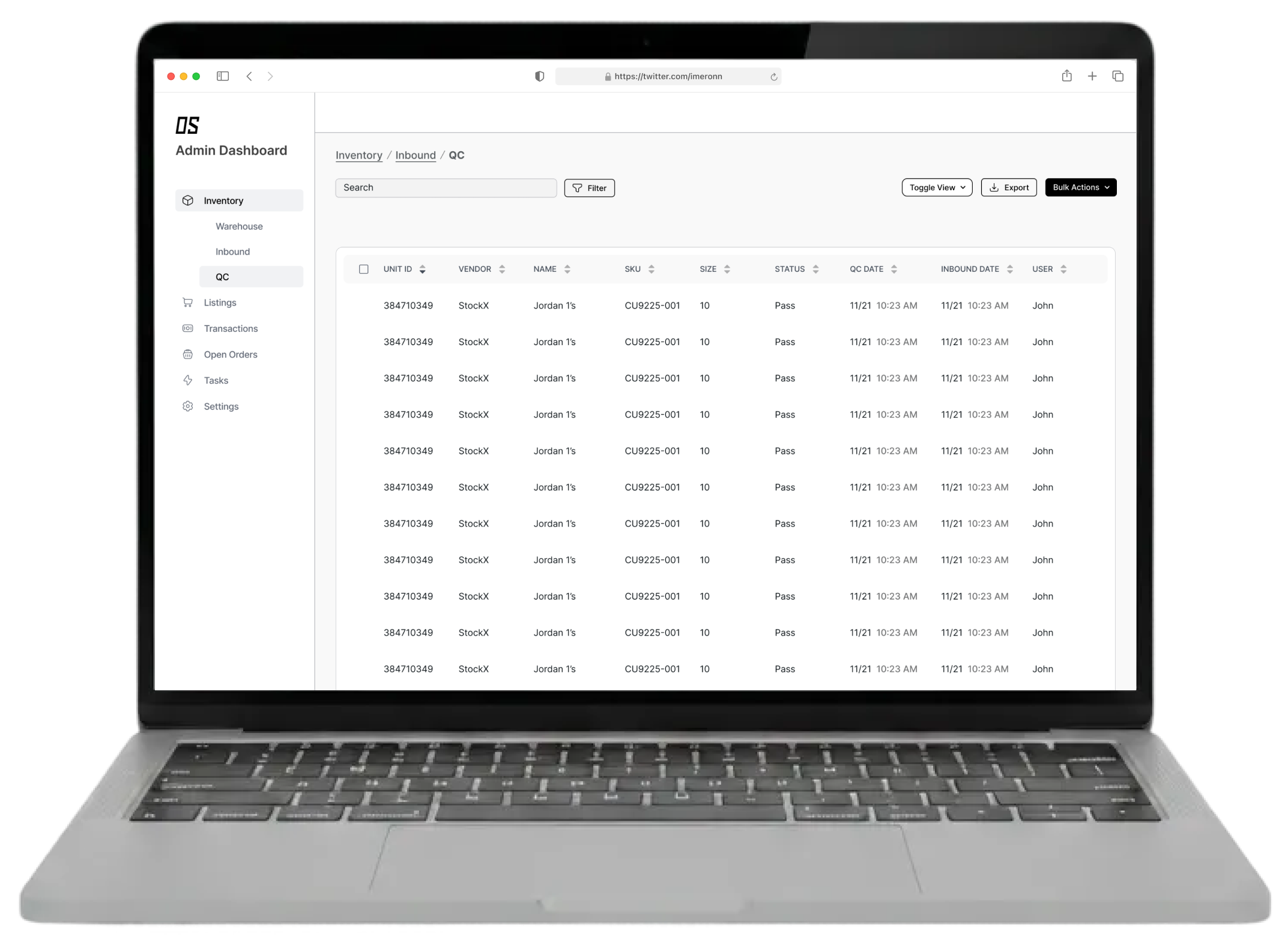
Connecting Teams via CIS
A centralized system for managing inventory workflows across internal teams.
View More